Project preview · Intralogistics
13 AGVs, a system that starts with the flow
November 2026: the Jungheinrich automation project is entering definition and verification. It is not complete yet: the work is turning a material-handling need into an integrated system where routes, missions, people and data have to work together.
Preview · work in progress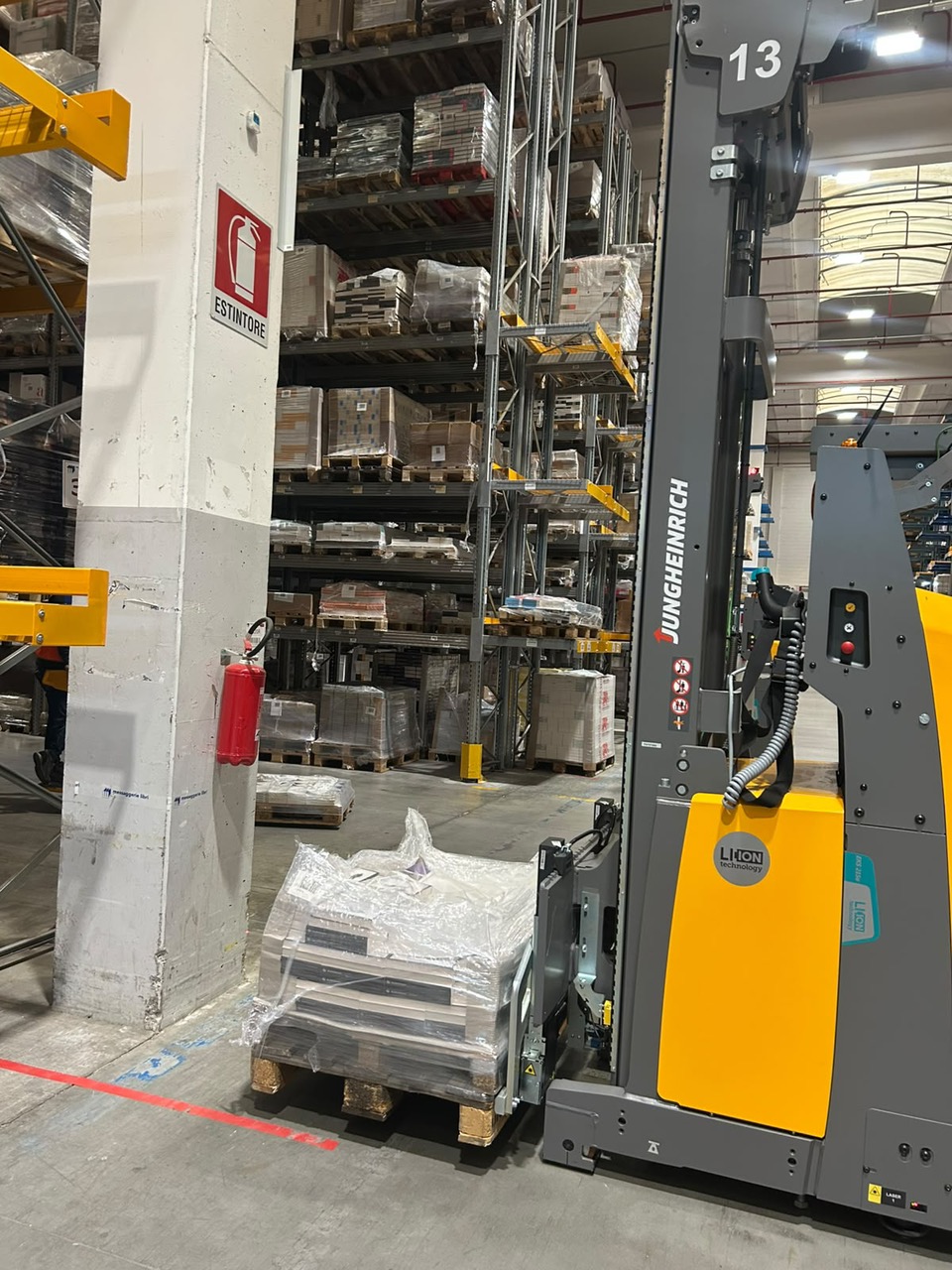
These figures describe the documented concept and the status of this preview. They are not a commissioning statement, a measured productivity result or a claim that the project is complete.
01 / The flow comes before the vehicle
The goal is not simply to add automated vehicles. The starting point is understanding which moves should become more regular, which areas can act as buffers and where automation must interact with manual work.
I framed the project around the warehouse flow matrix and functional areas: picking up, depositing, pre-storage, shipping, charging and exception handling. The vehicle is the visible part; the quality of the design lies in the rules that make it work well.
02 / A fleet designed for the real context
The solution under assessment includes a fleet of 13 Jungheinrich AGVs to move loads along defined routes and connect work areas without redesigning the existing warehouse from scratch.
The simulation combines layout, distances, curves, buffers, mission overlap and charging time. It brings warehouse conditions into the decision instead of promising an abstract speed figure.
03 / From WMS to the physical mission
The project’s core is integration: the management system creates a transport need, the logistics interface turns it into a mission and the traffic-management system coordinates AGV execution.
This separation makes states, errors, priorities and reconciliation visible. The database does not directly command the vehicle: WMS, interface, traffic rules and controls transform data into a safe physical action.
04 / Simulation as a decision tool
Dynamic simulation helps test scenarios before go-live: mission distribution, vehicle interaction, station availability and possible waiting.
Results must be read with their assumptions. Temporary obstacles, mixed traffic, incorrectly positioned pallets and occupied stations can change real behaviour. Making those limits explicit is part of the analysis.
05 / Preparing the environment for automation
An AGV project also involves what surrounds the vehicles: readable labels, pallet positioning, floors, Wi-Fi, access points, doors, signage, charging and safety procedures.
Preparing the environment reduces exceptions before they become downtime. That is why the work runs with operations, engineering, IT and facility, with clear ownership and progressive checks.
06 / How I measure project quality
My analysis does not stop at the number of vehicles. At steady state, availability, completed missions, waiting, manual interventions, WMS data quality, safety and flow continuity will matter.
This preview documents a path: define the problem, compare scenarios, expose dependencies and prepare a verifiable start-up. The project is still in progress and every result must be confirmed in real operations.
Automation starts when the flow becomes readable
The Jungheinrich project is another step in the warehouse automation journey: a combination of simulation, IT/OT integration and operational preparation. The fleet will be the visible result; the value lies in the end-to-end design that lets people, data and vehicles work as one system.
Preview scope
Prices, costs, protocols, network configurations and other confidential information are not published. The project is ongoing and final results are not yet available.